
Introduction
Stomach pain can be confusing. One day it feels like mild discomfort that settles after resting or eating, and another day it feels deeper, more persistent, or harder to ignore. Many adults struggle to describe exactly what they are feeling, especially when the pain comes and goes.
For some people, worry quickly follows: Is this just a normal stomach upset, or could it be something more serious like an ulcer? This uncertainty often leads to guessing, self-medication, or unnecessary panic.
The truth is that while ordinary stomach upset and ulcer-related pain can sometimes feel similar, they often follow different patterns. Learning to recognize these patterns can help you respond more calmly and make more informed decisions about your digestive health.

Quick Summary: Stomach Upset vs Ulcer-Related Pain
Ordinary stomach upset is usually short-lived, commonly triggered by food choices, stress, or eating habits, and often settles once the trigger passes.
Ulcer-related pain tends to follow a recurring pattern, may feel burning or gnawing, and can return even after temporary relief.
Understanding these general differences can help clarify why some stomach discomfort resolves quickly while other pain keeps coming back.
What Ordinary Stomach Upset Usually Feels Like
Ordinary stomach upset is very common and something most adults experience occasionally. It is often linked to everyday factors rather than an ongoing problem inside the stomach.
This type of discomfort may feel like cramping, mild aching, bloating, or a general uneasy sensation in the abdomen. The pain is usually not sharp or intense, and it may move around rather than staying in one specific spot.
Common triggers include:
-
Eating too much or too quickly
-
Skipping meals
-
Very spicy, oily, or heavy foods
-
Stress or anxiety
-
Irregular eating times
For example, someone who rushes meals during a busy workday may notice stomach discomfort later in the afternoon.
One key feature of ordinary stomach upset is duration. The discomfort often lasts for a short time — a few hours or, at most, a day or two. It may improve after resting, passing gas, using the toilet, or returning to normal eating habits.
In many cases, ordinary stomach upset resolves on its own. Once the trigger passes, the stomach gradually settles, and the pain does not return repeatedly.
What Ulcer-Related Pain Often Feels Like
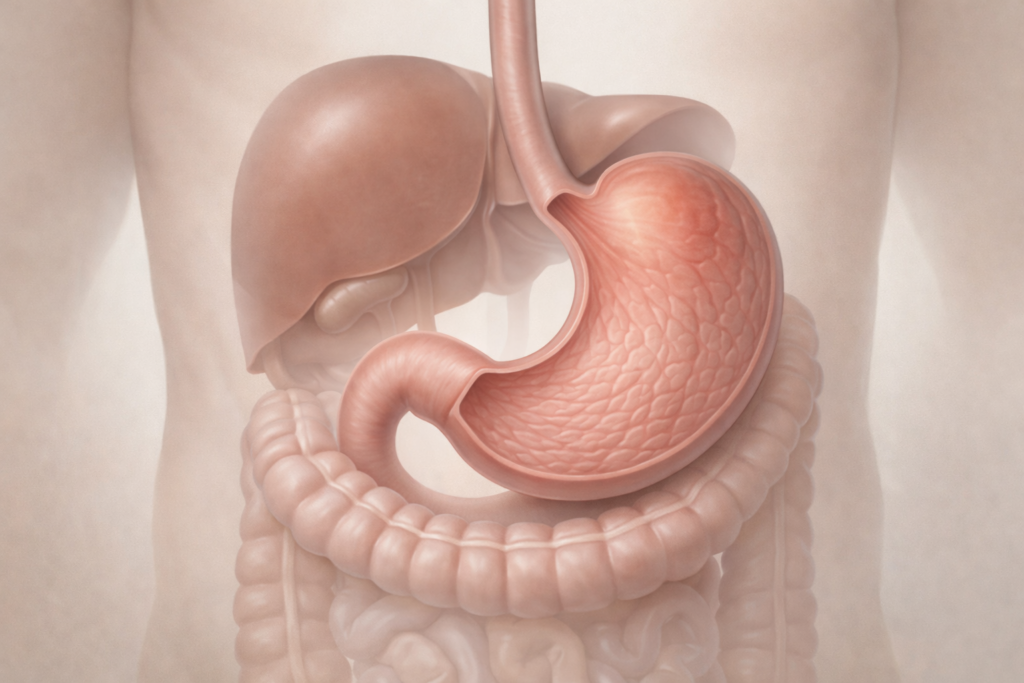
Ulcer-related pain tends to follow a more noticeable and repeating pattern. While this article does not diagnose ulcers, understanding how ulcer-related discomfort is commonly described helps explain why it feels different from ordinary stomach upset.
This type of pain is often described as:
-
Burning
-
Gnawing
-
Deep aching
Unlike general stomach upset, the pain may feel more focused, often in the upper abdomen. Some people describe it as hunger-like pain that does not fully disappear even after eating.
Timing is another important clue. Ulcer-related pain often appears:
-
When the stomach is empty
-
Late at night
-
A few hours after meals
In some cases, eating may temporarily reduce the pain, only for it to return later.
A common source of confusion is that ulcer-related symptoms can improve for a period and then come back. Someone may feel better for days or weeks, assume the issue has resolved, and then experience the same discomfort again. This cycle can make the condition harder to recognize.
Unlike ordinary stomach upset, ulcer-related pain often feels persistent or recurring, rather than random or occasional.
Key Differences Between Ordinary Stomach Upset and Ulcer-Related Pain
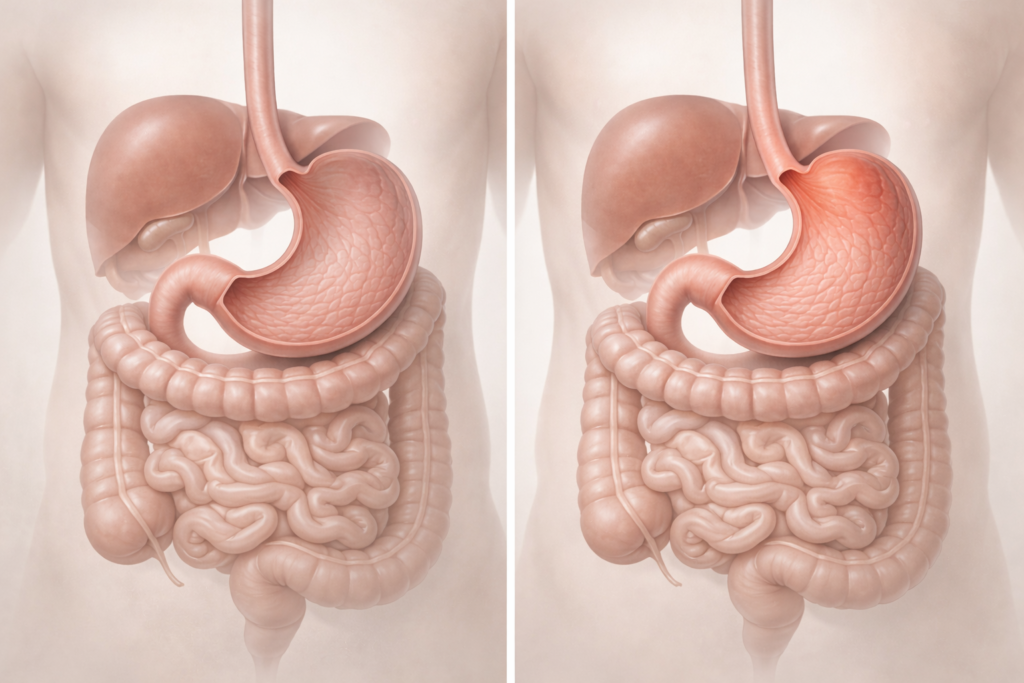 One of the most helpful ways to tell these two types of pain apart is by paying attention to patterns, not just pain intensity.
| Feature | Ordinary Stomach Upset | Ulcer-Related Pain |
|---|---|---|
| Duration | Short-to a few days) | Persistent or recurring |
| Pattern | Irregular, trigger-based | Often follows a pattern |
| Pain Type | Mild ache, bloating, cramps | Burning, gnawing, deep ache |
| Timing | After overeating or stress | Empty stomach, night, after meals |
| Response to Food | Gradual improvement | Temporary relief or worsening |
| Recurrence | Rare once resolved | Often returns |
Ordinary stomach upset usually settles completely once the trigger is removed. Ulcer-related pain often lingers, fades, and then returns, creating the sense that something is not fully resolving.
Common Misunderstandings
One common misunderstanding is assuming that all stomach pain means an ulcer. This can lead to unnecessary fear and inappropriate use of medications.
Another mistake is ignoring recurring pain simply because it goes away sometimes. Many people assume the issue is not serious since the pain is not constant, even when it keeps returning over weeks or months.
Frequent use of painkillers can also be misleading. While they may reduce discomfort temporarily, some medications can irritate the stomach lining, making it harder to identify the real cause of the pain.
Delaying proper evaluation is another common issue. People often wait until the pain becomes severe before seeking help, even though earlier attention can provide clarity and reassurance.
Lifestyle Factors That Can Blur the Difference
Daily habits can make it harder to distinguish ordinary stomach upset from more persistent discomfort.
Stress can trigger stomach upset and also worsen underlying stomach sensitivity. Irregular eating habits, such as skipping meals or eating late at night, can create pain patterns that resemble ulcer-related symptoms.
Alcohol intake may temporarily dull pain while quietly irritating the stomach lining. Misuse of certain pain relievers can also cause or worsen stomach irritation, making symptoms feel unpredictable.
These factors do not automatically mean a serious condition is present, but they highlight why awareness of daily habits is important when interpreting stomach symptoms.
When to Seek Medical Help
It is important to seek professional medical advice if stomach pain:
-
Keeps returning
-
Gradually worsens
-
Interferes with eating, sleeping, or daily activities
Other warning signs include:
-
Unexplained weight loss
-
Persistent nausea or vomiting
-
Dark or black stools
These symptoms should not be ignored. A healthcare professional can properly assess symptoms and recommend appropriate evaluation if needed. Seeking guidance is a responsible step toward understanding your health.
At Varna Health, we emphasize health education that helps individuals better understand digestive symptoms and make informed, responsible decisions about their well-being.
This article is for educational purposes only and does not replace professional medical advice.