
Introduction: “The Tests Are Normal… So Why Do I Still Feel This?”
You’ve done the scan. You’ve done the test. The doctor says everything looks fine.
But every time you eat, the discomfort returns.
Maybe it’s a burning sensation. Maybe it’s heaviness, bloating, or cramps. You leave the hospital relieved that nothing serious was found — yet confused because your body tells a different story.
If this sounds familiar, you are not alone. And more importantly, your symptoms are not imaginary.
Normal test results do not always mean normal digestive function.
This article is for educational purposes and does not replace professional medical advice.
The Myth of “Normal Means Healthy”

One of the biggest misunderstandings in digestive health is the belief that if tests are normal, everything must be fine.
Most common medical tests — such as scans or endoscopy — are designed to look for structural problems:
- Ulcers
- Tumors
- Severe inflammation
- Obvious tissue damage
If none of these are present, the report may say “normal.”
But here’s the key point:
A stomach can look normal but behave abnormally.
Think of it like a car engine. From the outside, everything appears intact. No cracks. No broken parts. But when you drive, it misfires. It shakes. It doesn’t respond smoothly.
The problem isn’t structural. It’s functional.
The same thing can happen in digestion.
When Exactly Does the Pain Happen?
The timing of your discomfort matters. It often gives important clues about what may be happening inside your body.
Pain Immediately After Eating
If discomfort begins right after your first few bites, it may suggest:
- Stomach sensitivity
- Early inflammation
- Heightened nerve response
Some people feel full very quickly. Others feel burning within minutes. This is common in functional digestive disorders.
Pain 1–2 Hours After Eating
If pain starts later, digestion speed may be involved.
Possible reasons include:
- Delayed stomach emptying
- Poor motility (movement of food through the digestive tract)
- Gas buildup from incomplete digestion
The stomach may not be emptying smoothly, leading to pressure and heaviness.
Burning in the Upper Abdomen
This often points to acid-related irritation.
It does not always mean an ulcer is present. Sometimes the stomach lining becomes sensitive to normal acid levels.
Lower Abdominal Cramping
This may suggest bowel involvement.
Gas, food intolerance, or irritable bowel patterns can cause discomfort lower in the abdomen.
Understanding when the pain happens increases clarity. It shifts the focus from “nothing is wrong” to “what exactly is happening during digestion?”
The Most Common Causes of Post-Meal Pain With Normal Tests
1. Functional Dyspepsia
This is one of the most common explanations.
In this condition:
- The stomach becomes overly sensitive
- Fullness happens quickly
- Burning or discomfort occurs without visible damage
The nerves in the stomach send stronger pain signals than usual, even when there is no structural problem.
2. Irritable Bowel Syndrome (IBS)
IBS affects how the gut moves and reacts.
It may cause:
- Bloating after meals
- Cramping
- Alternating constipation and diarrhea
- Discomfort triggered by certain foods
The bowel nerves become sensitive, reacting strongly to normal digestion.
3. Mild or Early Gastritis
Gastritis means inflammation of the stomach lining.
In early or mild stages:
- It may not appear dramatic on tests
- Symptoms may fluctuate
- Stress, painkillers, spicy food, or alcohol may worsen it
The irritation can be subtle but still uncomfortable.
4. Gastroparesis (Slow Stomach Emptying)
In some individuals, the stomach empties food more slowly than normal.
This can cause:
- Prolonged heaviness
- Nausea after eating
- Feeling full for many hours
Even without visible structural damage, delayed emptying can create persistent discomfort.
5. Food Intolerance & Sensitivity
Some bodies react poorly to specific foods.
Common triggers include:
- Dairy
- Fatty or fried meals
- Highly processed foods
- Very spicy dishes
Food sensitivity does not always show up on standard hospital tests. But the digestive system still reacts.
6. The Gut–Brain Axis
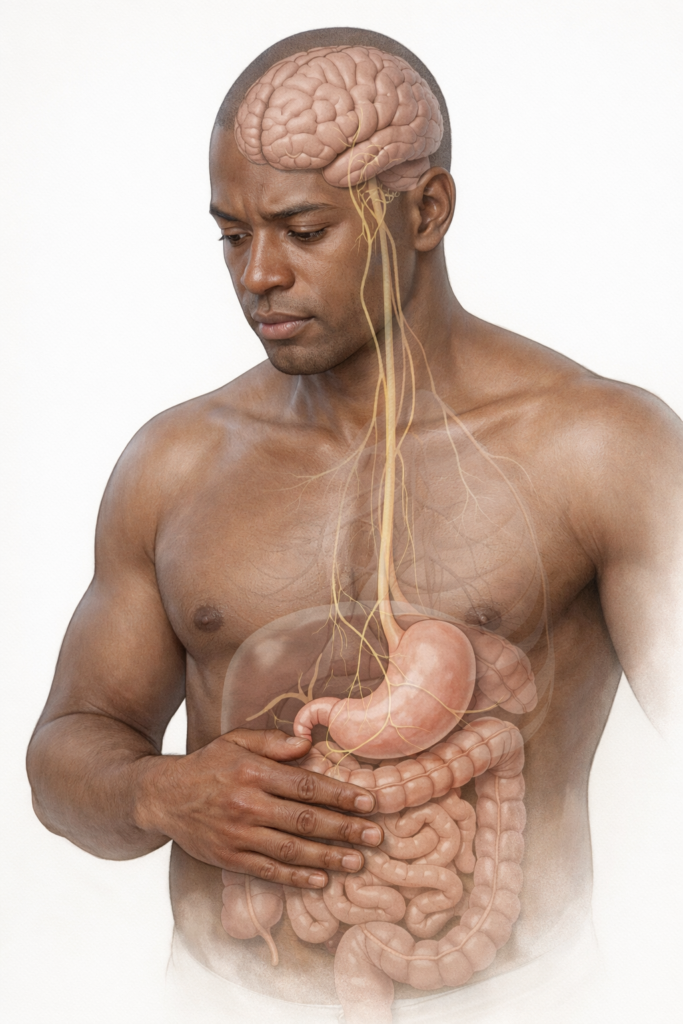
Your digestive system and your brain are deeply connected.
Stress, anxiety, and emotional strain can:
- Increase stomach sensitivity
- Change acid production
- Slow or speed digestion
- Worsen bloating
Many people notice their symptoms worsen during stressful periods.
This connection does not mean the problem is “in your head.” It means the nervous system and digestive system communicate constantly.
Why Doctors Sometimes Say “Everything Is Fine”
It is important to understand the medical approach.
Doctors are trained first to rule out dangerous or life-threatening conditions. If scans and tests show no ulcers, tumors, or severe disease, the results are considered reassuring.
From a safety standpoint, that is good news.
However, functional digestive disorders often require:
- Symptom tracking
- Dietary adjustments
- Stress management
- Long-term lifestyle consistency
These conditions are real — but they do not always appear clearly on imaging.
Understanding this can reduce frustration and prevent unnecessary anger toward healthcare providers.
Red Flags That Should Never Be Ignored
While functional disorders are common, certain symptoms require urgent medical attention:
- Unexplained weight loss
- Vomiting blood
- Black or tarry stool
- Severe worsening pain
- Persistent vomiting
If you experience any of these, seek medical care immediately.
Emotional Validation: What You Feel Is Real
Your symptoms are real.
You are not overreacting.
Digestive function is complex — and not everything shows on a scan.
It is possible to feel pain, discomfort, or heaviness even when tests appear normal. The absence of visible damage does not mean the absence of imbalance.
Understanding this is the first step toward managing it properly.
What You Can Do

Post-meal stomach pain is rarely solved by random medication alone. It requires structure and consistency.
Here are practical steps to consider:
1. Track When Symptoms Occur
Note:
- What you ate
- How much you ate
- When discomfort began
- Your stress level that day
Patterns often reveal hidden triggers.
2. Reduce Meal Size
Large meals stretch the stomach and increase pressure.
Smaller, more frequent meals are often gentler on sensitive digestive systems.
3. Identify and Adjust Trigger Foods
If certain foods consistently worsen symptoms, reduce or temporarily avoid them.
Do this gradually rather than drastically eliminating everything at once.
4. Manage Stress Intentionally
Daily stress affects digestion more than many people realize.
Simple steps such as:
- Slowing down during meals
- Avoiding rushed eating
- Improving sleep
- Taking short daily walks
can significantly reduce sensitivity over time.
5. Seek Digestive-Focused Medical Care
If symptoms persist, consult a healthcare professional who understands functional digestive disorders.
Early, structured management often prevents symptoms from becoming chronic.
A Calm Closing Perspective
Recurring stomach pain after eating should not be ignored — but it also should not lead to panic.
Many digestive imbalances are manageable when approached consistently and thoughtfully.
Random medication use, self-diagnosis, or frequent switching between treatments often prolongs confusion. A structured, long-term plan usually produces better outcomes than quick fixes.
At Varna Health, we believe that better health starts with understanding your body and making informed, consistent choices. Our focus is on education that helps people take responsibility for their long-term well-being.